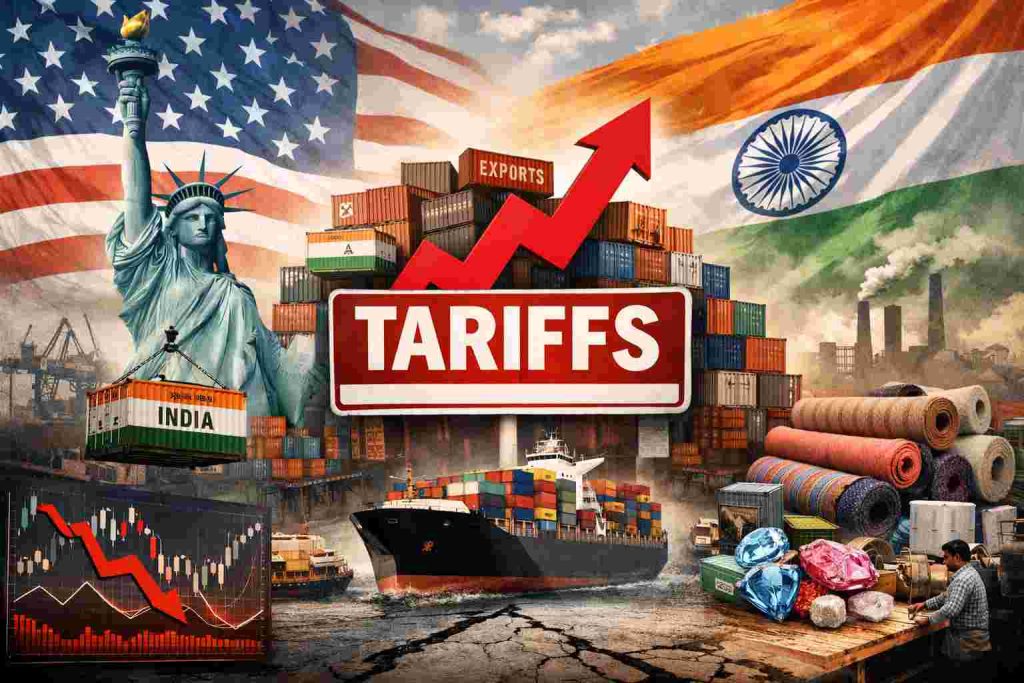
Recent tariff developments between the United States and India have brought renewed attention to the fragile balance of global trade relations. As reported widely in U.S. media, including coverage similar in tone to USA Today, Washington’s latest tariff stance toward Indian imports has created uncertainty for businesses, exporters, and policymakers on both sides.
The situation highlights how trade policy, geopolitics, and domestic economic priorities are increasingly intertwined in shaping international commerce.
What’s Driving the Tariff Dispute
The U.S. administration has raised tariffs on a range of Indian goods, arguing that the move is aimed at correcting long-standing trade imbalances and protecting American industries. Officials have also linked the decision to broader geopolitical concerns, signaling that trade policy is being used as a strategic tool rather than purely an economic one.
For India, the higher tariffs come at a sensitive time. The country has positioned itself as a global manufacturing and export hub, particularly in sectors such as textiles, apparel, engineering goods, and gems and jewelry. Increased duties on these products could make Indian exports less competitive in the U.S. market, one of India’s largest trading partners.
Impact on Indian Industries
Export-oriented industries in India are feeling the pressure. Manufacturers and exporters warn that higher tariffs could lead to reduced orders, thinner profit margins, and potential job losses in labor-intensive sectors. Small and medium-sized exporters, in particular, face challenges absorbing the additional costs.
At the same time, industry leaders are urging diversification. Many businesses are exploring new markets in Europe, the Middle East, and Asia to reduce dependence on the U.S. market. While this shift may take time, it could ultimately strengthen India’s trade resilience.
Market Reaction and Investor Sentiment
Financial markets have responded cautiously to the tariff news. Investors tend to react sharply to trade uncertainty, and concerns over prolonged tariffs have contributed to short-term volatility. However, analysts note that India’s strong domestic demand and growing services sector provide a cushion against external shocks.
Long-term investors remain optimistic that India’s economic fundamentals — including a young workforce, expanding digital economy, and infrastructure development — will help offset the impact of temporary trade disruptions.
Diplomatic Efforts Continue
Despite the tension, diplomatic channels remain open. Trade officials from both countries continue discussions aimed at easing friction and finding common ground. There is a shared understanding that a prolonged trade standoff would hurt businesses and consumers in both nations.
The U.S. and India also share broader strategic interests in areas such as technology, defense, energy, and supply chain security. These factors increase the likelihood that both sides will eventually seek compromise rather than escalation.
What This Means for Global Trade
The tariff dispute reflects a larger trend in global trade, where economic policy is increasingly influenced by national security and political considerations. For emerging economies like India, this environment demands flexibility, diversification, and stronger regional partnerships.
For the United States, the challenge lies in balancing domestic industry protection with the benefits of stable international trade relationships.
Conclusion
The latest U.S. tariff actions toward India mark another chapter in an evolving trade relationship that has seen both cooperation and conflict. While the immediate impact poses challenges for Indian exporters, it also encourages strategic shifts and long-term diversification.
As negotiations continue, businesses and markets will be watching closely. The outcome will not only shape U.S. India trade ties but also send a broader signal about the future direction of global trade policy.